
Credit Card Debt vs. Savings: Why the Gap in Rates Matters
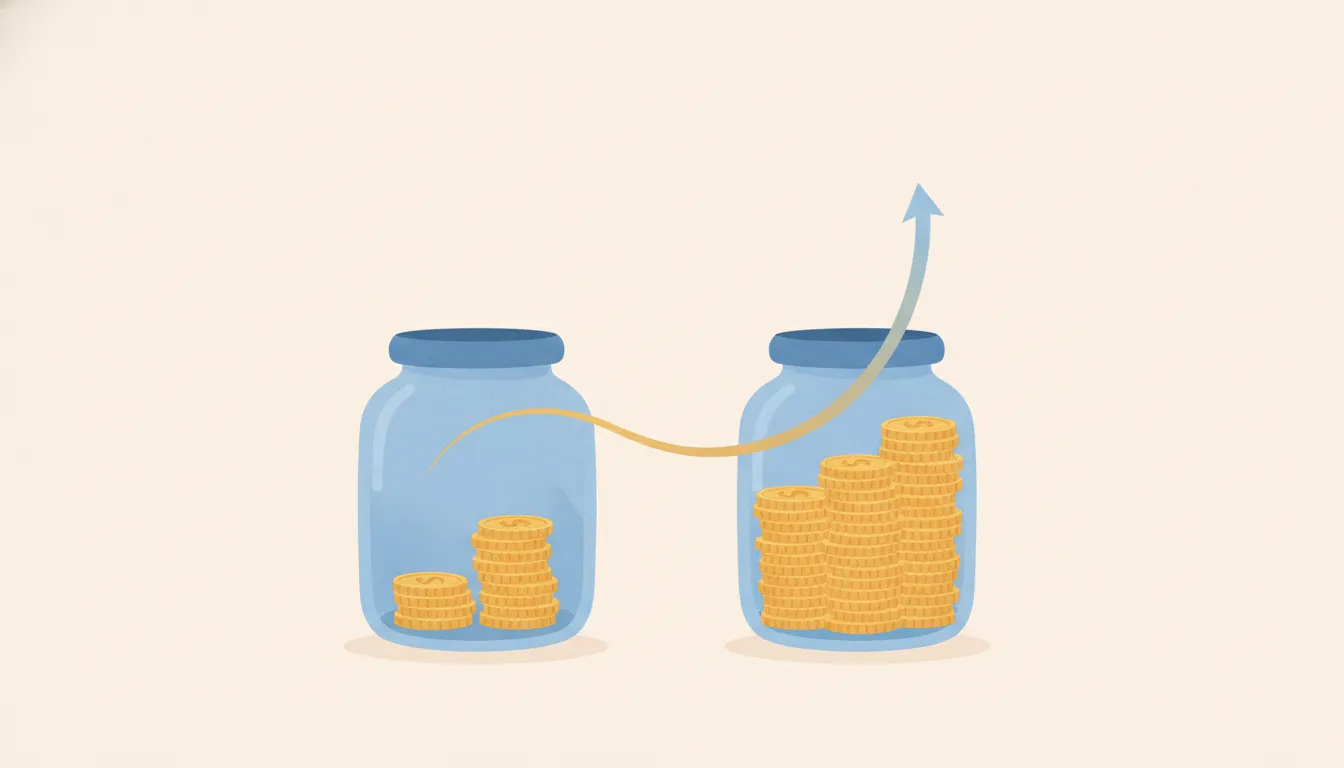
Many households hold a savings balance and a credit card balance at the same time. They sit in different accounts, but the rates attached to them can be very far apart. Looking at those two rates together is one of the clearest ways to understand what carrying a balance costs.
Key takeaways
- A savings balance and a card balance can be far apart in rate, so a dollar of debt can cost many times what a dollar of savings earns.
- Card issuers generally apply a daily rate to the balance, and interest can compound, so a carried balance can grow faster than many people expect.
- The Rule of 72 suggests a balance at 24% would double in roughly three years if nothing were paid.
- Savings and debt serve different purposes, so the useful comparison is between cost, flexibility and risk rather than between two numbers alone.
- Comparing the rate on each balance, the time it would take to repay, and what a surprise bill would do to the plan turns a vague worry into specific questions.
Two balances, two very different rates
Imagine a household with $3,000 in savings earning 4% a year and a $5,000 credit card balance at a 24% annual rate. Over a year, the savings would earn about $120. The card balance, if carried the whole year without paydown, would generate about $1,200 in interest charges.
Those are simplified figures, since real balances change monthly. They still show the shape of the gap: the debt can cost roughly ten times what the savings earn. That doesn't make the savings pointless, and it doesn't settle what any household ought to do. It simply puts a price on each.
How card interest builds
The Consumer Financial Protection Bureau explains that a card's APR is a yearly rate, but issuers commonly turn it into a daily rate by dividing by 360 or 365. They apply that daily rate to the balance each day, and because interest becomes part of the balance, it may compound. Many cards also stop offering a grace period on new purchases once a balance is carried from month to month.
Your cardholder agreement spells out the exact method, including how payments above the minimum are applied.
What three years can look like
Compounding is easiest to see with a simple comparison. Suppose $10,000 sits in two places for three years, with annual compounding and no payments or deposits:
- At 24%, a card balance would grow to about $19,070.
- At 4%, a savings balance would grow to about $11,250.
The Rule of 72 gives a quick check. Divide 72 by the annual rate, and the answer is roughly how many years it takes a balance to double. At 24% that is three years. At 4% it is about 18 years.
Real cards are not this tidy, because people make payments, charge new purchases and sometimes see their rate change. The comparison is meant to show direction and speed, not to predict a particular balance.
Why this isn't just about the math
If the debt is so much more expensive, why would anyone keep savings? The answer is that the two serve different jobs. Savings provide flexibility. They can cover a car repair or a gap in income without adding to a balance. Debt reduction lowers a cost that otherwise keeps accruing.
Households weigh these differently, depending on how steady their income is, how exposed they are to surprise expenses, and how much stress a balance causes. Someone with an unpredictable income may place more weight on having cash within reach. Someone with a stable income and a very high rate may feel the cost of the balance more sharply. Both views are reasonable, and neither is a universal rule.
Questions that make the comparison concrete
Instead of treating "more debt than savings" as a single worrying fact, it can help to break it into questions:
- What is the actual rate on each card balance, and what rate does the savings account pay?
- At the current payment, how many months would the balance take to clear?
- If a surprise bill arrived this month, where would the money come from, and would it go onto the card?
- How much of the savings balance is meant for emergencies, and how much has no specific job?
- Would a change in income, even a temporary one, put the card payments at risk?
Answers to these will differ for every household, and they can change over time. Writing them down is often more useful than any single rule of thumb.
Common questions
Is it unusual to have savings and credit card debt at the same time?
No. Many households hold both, often because they want cash on hand for emergencies while still carrying a balance. The rates on the two can be very different, which is why it helps to compare them directly.
How does credit card interest compound?
Issuers typically divide the annual rate by 360 or 365 to get a daily rate and apply it to the balance each day. Because interest is added to the balance, later interest can be charged on earlier interest. Your cardholder agreement describes the exact method.
What is the Rule of 72?
It is a shortcut for estimating how long a balance takes to double at a fixed annual rate: divide 72 by the rate. At 24% that is about three years. It is an approximation, and real cards also involve payments and changing balances.
Explore your next step
Sources and further reading
From the Borrow Smart newsletter
NIFE provides general financial education. LendsightAI and Debt Done Date are separate for-profit partners; optional services may have a fee.